What Does an Integrative Vet Actually Do? Understanding Holistic Veterinary Care
What Does an Integrative Vet Actually Do? Understanding Holistic Veterinary Care
When pet parents begin searching for a more natural, whole-body approach to care, they often come across terms like holistic vet or integrative vet.
At first glance, these phrases can seem interchangeable—but they reflect a broader shift happening in veterinary care today.
More families are looking for answers that go beyond symptom management. They want to understand why their pet is struggling in the first place and what can be done to support long-term health more intentionally and proactively.
So what exactly does an integrative and holistic veterinarian do?
Looking Beyond Symptoms
Traditional veterinary medicine is incredibly important, especially during emergencies, acute illness, surgery, and diagnostics. But many chronic conditions don’t always fit neatly into a quick-fix approach.
An integrative vet takes a wider view.
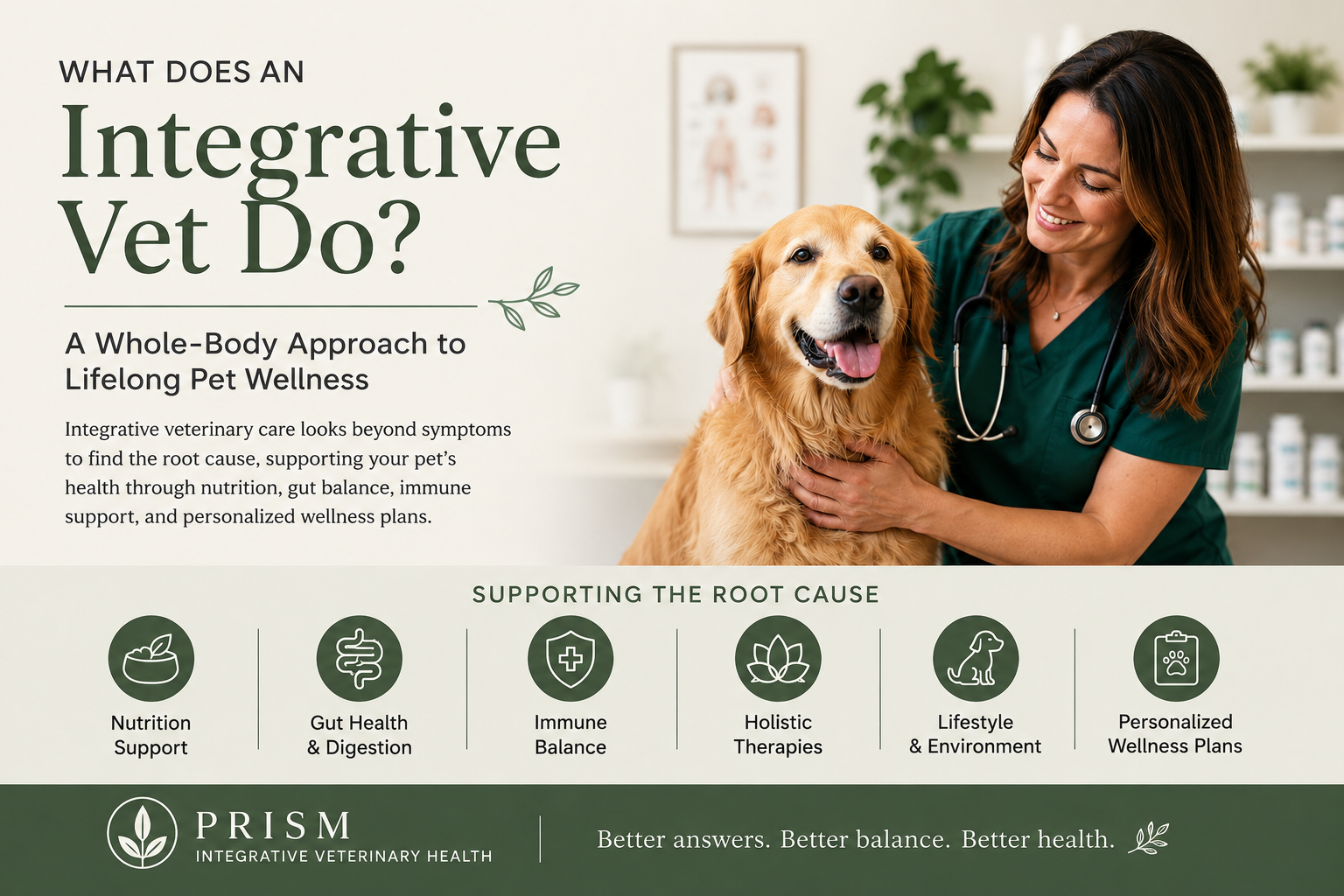
Instead of focusing only on the visible symptom—such as itching, digestive upset, anxiety, or recurring ear infections—we look at the entire picture:
- Nutrition
- Gut health
- Immune function
- Environment
- Stress
- Lifestyle
- Inflammation patterns
- Individual history
The goal is to understand why the body is struggling and how we can better support healing from the inside out.
What Is the Difference Between a Holistic Vet and an Integrative Vet?
These terms are closely related, but there are subtle differences.
A holistic vet focuses on treating the whole animal rather than isolated symptoms. This often includes nutrition, lifestyle support, emotional wellbeing, and environmental health.
An integrative vet combines conventional veterinary medicine with supportive holistic therapies. This allows pets to benefit from both modern diagnostics and a more comprehensive wellness approach.
At Prism Integrative Veterinary Health, we believe the best care often comes from thoughtfully combining both worlds.
How Integrative Veterinary Care Supports Whole-Body Health
Integrative and holistic veterinary care focuses on supporting the body’s overall balance while using evidence-informed therapies alongside conventional medicine.
Depending on the individual pet, care may include:
- Nutritional guidance
- Fresh food recommendations
- Gut health support
- Targeted supplementation
- Acupuncture
- Chiropractic care
- Lifestyle adjustments
- Preventative wellness planning
The goal isn’t simply to quiet symptoms temporarily—it’s to support long-term resilience and overall wellbeing.
Why More Pet Parents Are Seeking Holistic and Integrative Care
Many families begin searching for the best holistic vet after dealing with recurring or unresolved health issues.
Common concerns include:
- Chronic allergies
- Digestive problems
- Skin issues
- Ear infections
- Anxiety
- Arthritis
- Food sensitivities
- Chronic inflammation
Often, these pets improve temporarily with medications but continue experiencing flare-ups.
That’s when many pet parents begin asking:
Is there a deeper imbalance we haven’t addressed yet?
This is where integrative medicine can offer a different perspective.
The Importance of Nutrition in Holistic Veterinary Medicine
One of the most foundational tools in holistic and integrative care is nutrition.
Food affects nearly every system in the body, including:
- Immune regulation
- Inflammation
- Gut health
- Energy levels
- Skin and coat quality
- Metabolic function
Highly processed diets may work well for some pets, but others benefit significantly from fresher, more individualized nutrition plans.
An integrative holistic vet often evaluates diet as one of the first steps toward supporting long-term wellness.
Gut Health and the Immune System
Many chronic conditions can be connected back to gut imbalance.
The digestive tract plays a major role in immune function, which means disruptions in the microbiome can influence far more than digestion alone.
When gut health becomes compromised, pets may experience:
- Allergies
- Chronic itching
- Inflammation
- Food sensitivities
- Recurrent infections
- Immune dysregulation
Supporting the gut can often create improvements throughout the entire body.
Personalized Care Matters
One of the most important aspects of holistic and integrative medicine is personalization.
There is no one-size-fits-all protocol.
Every pet has:
- A unique health history
- Different environmental exposures
- Different nutritional needs
- Different stress levels
- Different genetic tendencies
A thoughtful, individualized approach allows care to be tailored to the specific pet in front of us—not just the diagnosis.
Finding the Best Holistic Vet Near You
When searching online for the best vet near me or the best holistic vet, it’s important to look for a veterinarian who takes time to understand the full picture of your pet’s health.
A strong integrative veterinary approach should combine:
- Advanced diagnostics when needed
- Preventative care
- Nutritional guidance
- Root-cause investigation
- Supportive holistic therapies
- Personalized treatment planning
True wellness care is about partnership, education, and long-term support.
A More Complete Approach to Healing
Holistic and integrative veterinary medicine isn’t about rejecting conventional care. It’s about expanding the conversation around healing.
By combining modern medicine with supportive therapies and root-cause thinking, we can often support pets in a deeper and more sustainable way.
At Prism Integrative Veterinary Health, we believe pets deserve care that looks at the whole picture—not just isolated symptoms.
If you’re exploring a more natural path for your pet’s health, our team is here to help guide you.