
When Routine Bloodwork Isn’t Enough: How Integrative Diagnostics Can Reveal More About Your Pet’s Health

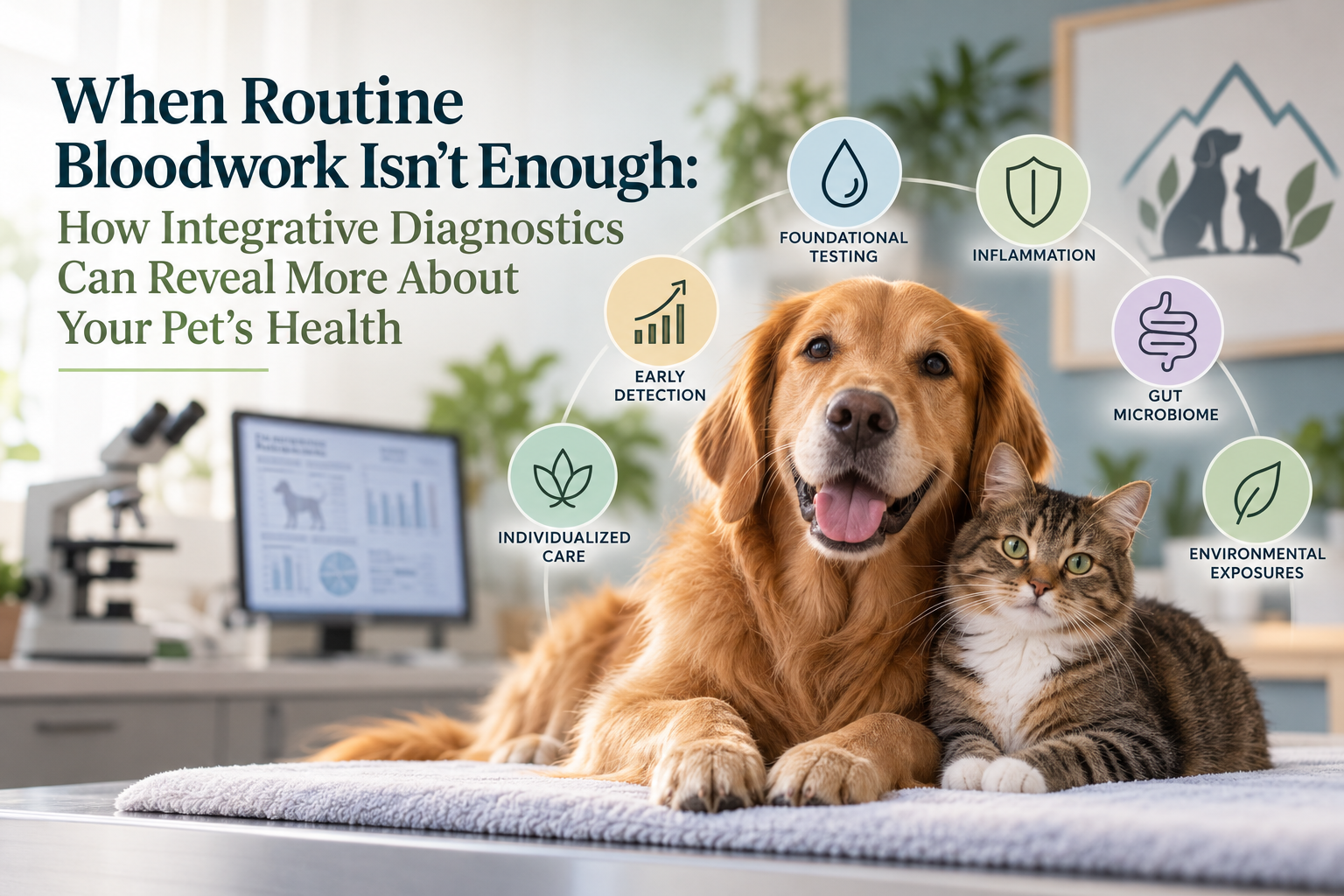
When Routine Bloodwork Isn’t Enough: How Integrative Diagnostics Can Reveal More About Your Pet’s Health
When a pet isn’t feeling well, bloodwork is often one of the first places veterinarians turn for answers.
And for good reason.
Routine blood, urine, and fecal testing can provide valuable information about organ function, infection, anemia, and many other health concerns.
But what happens when your pet still isn’t feeling well—and the answers aren’t obvious?
Maybe your dog continues to struggle with allergies or digestive problems. Maybe your cat seems tired or simply “not themselves.” Or perhaps routine testing looks relatively normal, but you know something has changed.
At Prism Integrative Veterinary Health, this is where integrative diagnostics can help us look deeper.
Diagnostics Should Help Us Ask “Why?”
A diagnosis tells us what condition may be present.
But in integrative veterinary medicine, we often want to go one step further.
Why is this happening?
Prism combines foundational testing with advanced integrative diagnostics designed to identify patterns that may be contributing to chronic illness or changes in overall health.
Depending on the patient, we may want to learn more about inflammation, nutrition, gut health, environmental exposures, metabolic function, or other factors.
The goal isn't simply to order more tests.
It's to gather information that can meaningfully change how we care for your pet.
Starting With the Foundations
Integrative medicine doesn't mean skipping conventional veterinary testing.
Foundational diagnostics remain extremely important and may include:
- Bloodwork
- Urinalysis
- Fecal testing
- Cytology
- Ultrasound
- Vaccine titer evaluations
A physical examination and appropriate conventional diagnostics help us understand what's happening medically before determining whether deeper investigation may be useful.
Looking Deeper at Chronic Inflammation
Inflammation is a normal part of the body's response to injury or illness.
The concern arises when inflammation becomes persistent.
Chronic inflammatory patterns may accompany allergies, immune disorders, gastrointestinal problems, metabolic dysfunction, cancer, and other systemic illnesses.
For a pet experiencing recurring health problems, understanding inflammation can provide another piece of the puzzle.
Instead of looking at each flare-up as a completely separate event, we can begin asking whether there is a larger pattern connecting them.
Understanding the Gut Microbiome
Your pet's gastrointestinal tract does much more than digest food.
It is home to a complex community of microorganisms known as the gut microbiome.
When that microbial community becomes disrupted, the effects may extend beyond digestion.
At Prism, microbiome health may be considered for pets experiencing concerns such as:
- Chronic digestive problems
- Recurring diarrhea
- Allergies
- Inflammation
- Immune dysfunction
- Health changes following antibiotic use
Understanding what's happening in the gut can help us determine whether nutrition, targeted supplements, microbiome restoration, or other interventions should become part of the plan.
Investigating Environmental Exposures
Sometimes what surrounds a pet matters just as much as what's happening inside them.
Prism's integrative diagnostic approach can include environmental toxin screening for exposures such as heavy metals, mycotoxins, glyphosate, and other toxicants when clinically appropriate.
That doesn't mean every pet needs toxin testing.
It means environmental history is another piece we can consider when a patient's symptoms, lifestyle, and medical history suggest that deeper investigation could be useful.
Early Detection Before Obvious Symptoms
Advanced diagnostics aren't only useful when a pet is already sick.
One of the most exciting parts of proactive medicine is the opportunity to identify subtle changes before they develop into more significant health concerns.
Integrative diagnostics may help evaluate areas such as:
- Inflammatory trends
- Nutritional deficiencies
- Microbiome imbalance
- Environmental exposures
- Metabolic health
- Immune function
The earlier we understand that something is changing, the earlier we can decide whether intervention is appropriate.
More Testing Isn't Always Better
Integrative medicine shouldn't mean running every available test.
More information is valuable only when that information is useful.
That's why testing should be individualized according to your pet's age, medical history, symptoms, risk factors, lifestyle, and health goals.
For one patient, routine bloodwork may provide exactly what we need.
For another, a deeper diagnostic investigation may help explain a problem that has been difficult to understand.
Turning Information Into an Individualized Plan
The most important part of diagnostics is what happens afterward.
At Prism, diagnostic information helps guide an individualized plan that may include nutrition, conventional medication when appropriate, acupuncture, herbal or supplemental support, microbiome restoration, lifestyle changes, or other therapies.
The test isn't the treatment.
It's the roadmap.
Looking Deeper at Prism
At Prism Integrative Veterinary Health in Tinton Falls, New Jersey, we believe veterinary diagnostics should do more than confirm that a problem exists.
They should help us understand your pet more completely.
By combining conventional testing with advanced integrative diagnostics when appropriate, we can investigate the underlying patterns affecting your pet's health and create a more personalized path forward.
Because sometimes the most important question isn't simply “What is wrong?”
It's “Why is this happening?”